Sky Briefing • Wednesday, October 7, 2026
Geomagnetic storm observed as Sun sends CMEs to Earth
A minor geomagnetic storm brought aurora to lower latitudes, while the Sun produced an M-class flare and two Earth-directed coronal mass ejections.
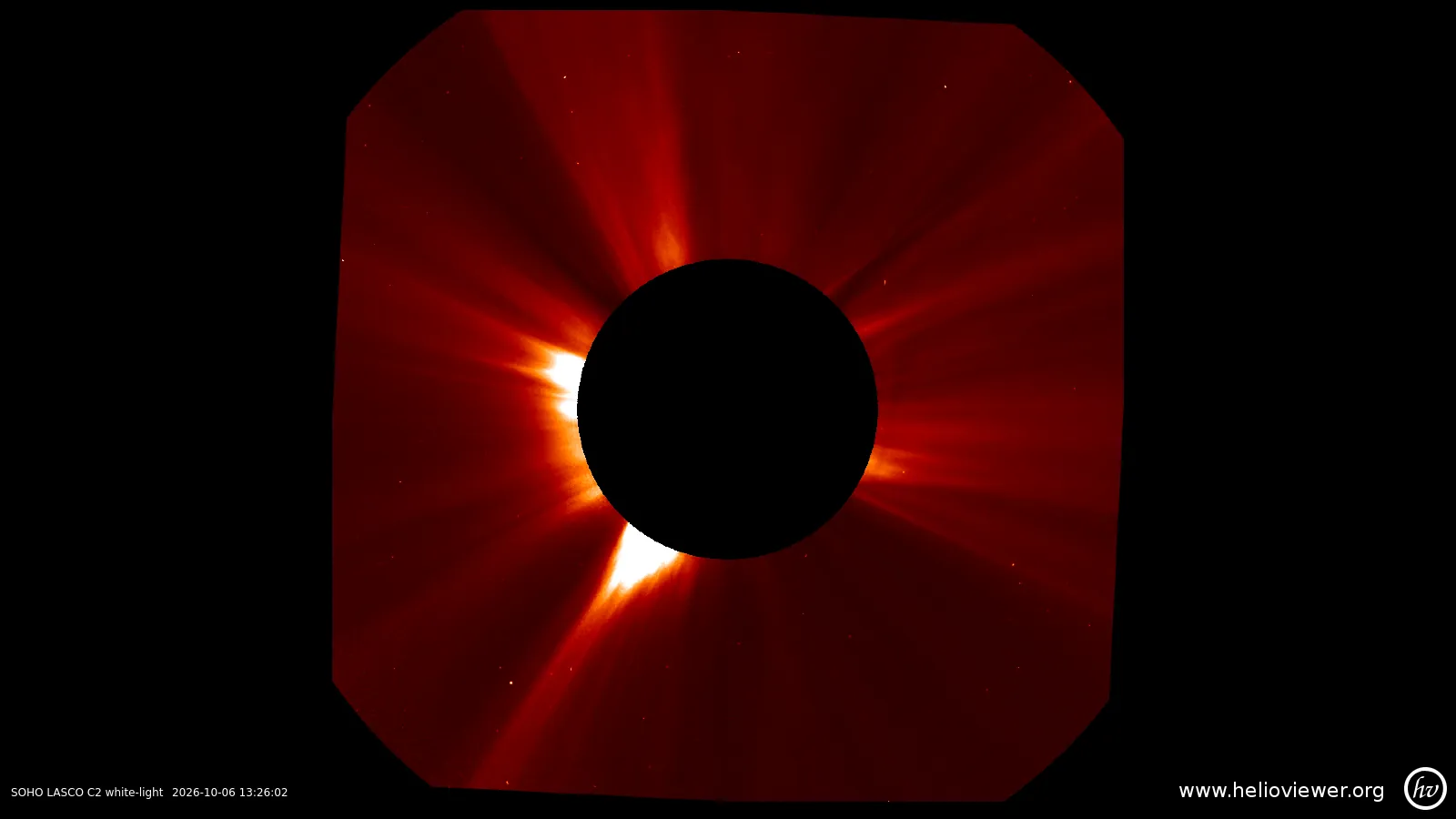
LASCO C2 coronagraph, Oct 6, 2026, 13:08 UTC. The Sun's outer atmosphere at the time of a coronal mass ejection catalogued by NASA's DONKI this week. Credit: ESA & NASA/SOHO (LASCO), rendered by Helioviewer.org. Real observation, not an illustration.
By SpaceWeatherTracker Staff • Data: NOAA SWPC, NASA DONKI, USGS, NOAA GOES, SpaceWeatherTracker meteor calendar •
2 min read
Peak Kp index
5.7
Geomagnetic storm level
Strongest flare
M1.8
GOES X-ray class
Earth-directed CMEs
2
NASA DONKI catalog
Largest earthquake
M5.9
USGS
Solar activity this week resulted in notable effects on Earth's magnetic environment. A geomagnetic disturbance on October 4 reached minor storm levels, while the Sun also produced a mid-level solar flare and two Earth-directed coronal mass ejections.
On the ground, several moderate earthquakes shook regions in the Pacific. Looking ahead, skywatchers can prepare for the peak of the Orionids meteor shower later this month.
Lead story · Space weather
Space weather
Geomagnetic Conditions
Earth’s magnetic field experienced a minor geomagnetic storm on October 4, with the planetary K-index peaking at Kp 5.7. This level of activity can energize the atmosphere and push the aurora to latitudes lower than is typical, making the northern lights visible to more observers.
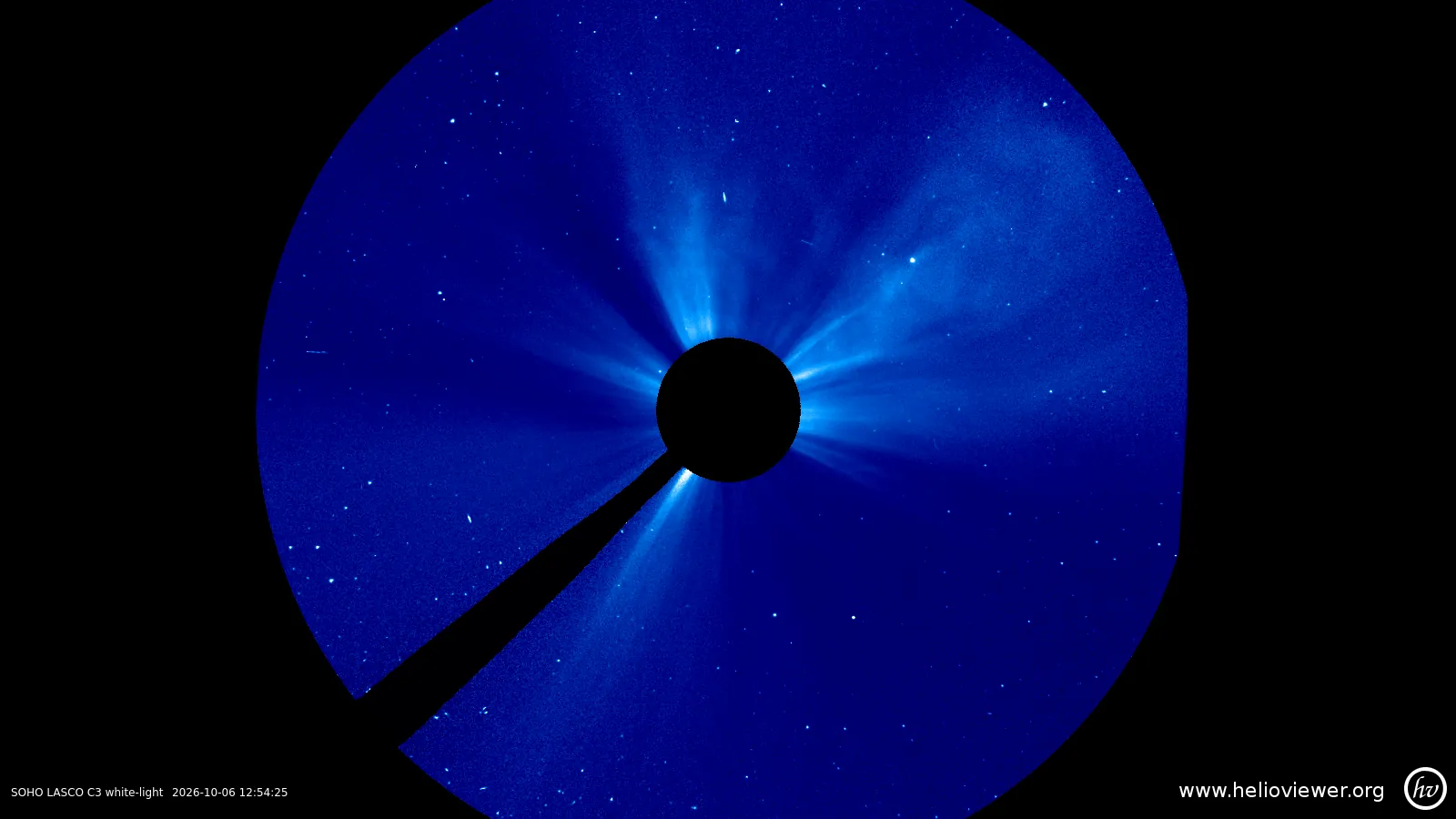
Additionally, NOAA issued an alert on October 5 for an elevated electron flux that exceeded 1,000 pfu, which can pose a radiation hazard to satellites. A separate alert on October 6 for a Type II radio emission indicated a coronal mass ejection was propagating from the Sun, often a precursor to space weather impacts at Earth.
The record
- Geomagnetic activity peaked at Kp 5.7 this week
- That is storm level, which pushes the aurora toward lower latitudes than usual.
- NOAA SWPCOct 4, 2026, 6:00 PM UTC
- NOAA alert: Type II Radio Emission
- Begin Time: 2026 Oct 06 0559 UTC.
- NOAA SWPC alertsOct 6, 2026, 6:15 AM UTC
- NOAA alert: Electron 2MeV Integral Flux exceeded 1,000pfu
- Threshold Reached: 2026 Oct 05 1830 UTC.
- NOAA SWPC alertsOct 5, 2026, 6:47 PM UTC
The Sun
Solar Activity
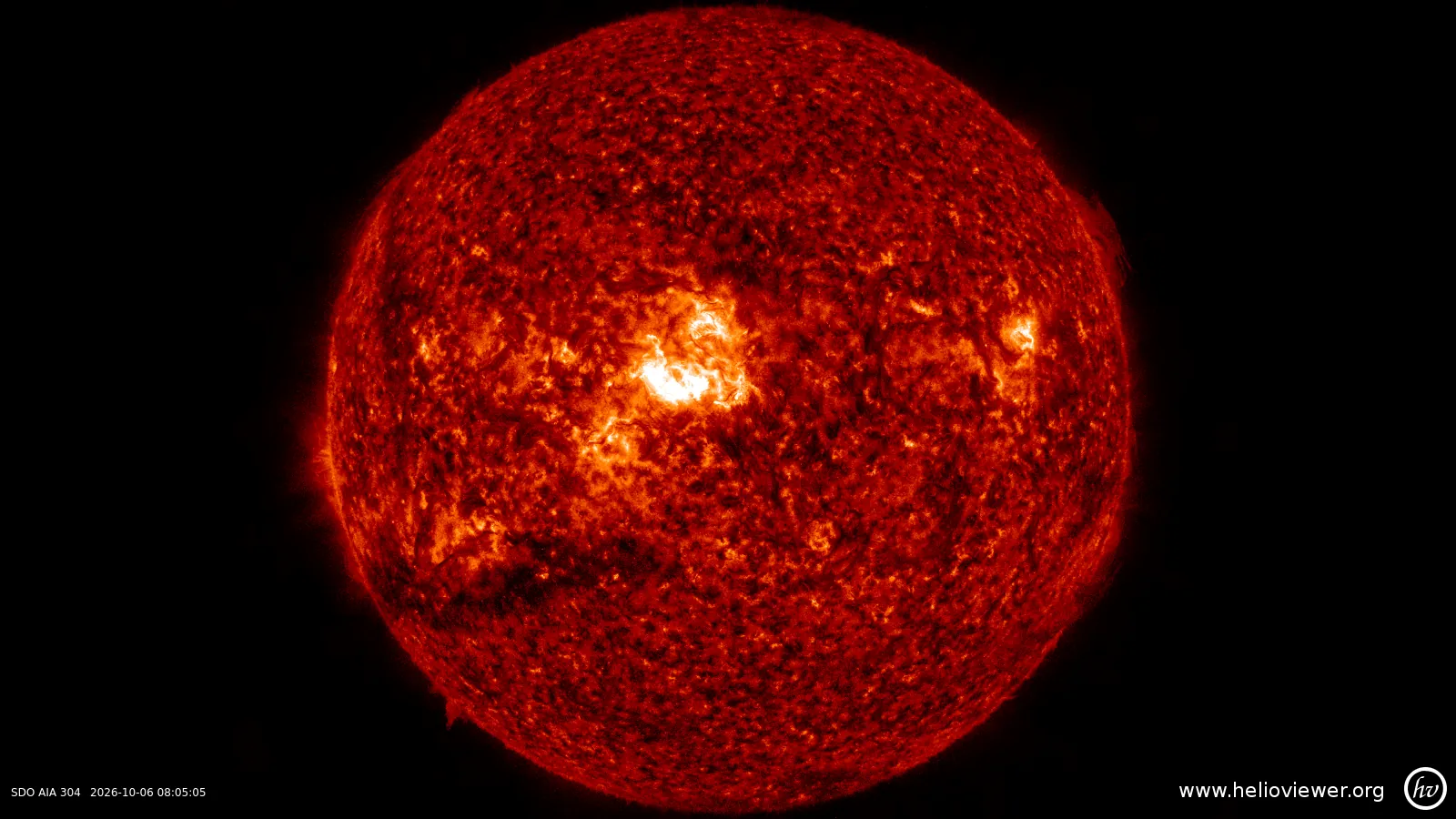
Over the past seven days, solar activity included 40 observed flares, with the strongest reaching a magnitude of M1.8 on October 6. M-class flares are medium-sized events that can cause brief radio blackouts, primarily affecting high-frequency communications on the sunlit side of the planet.
Two coronal mass ejections (CMEs) were observed leaving the Sun on a path toward Earth this week. The faster of these clouds of solar plasma was measured traveling near 701 km/s and has the potential to disturb Earth's magnetosphere upon arrival.
The record
- 2 Earth-directed coronal mass ejections left the Sun this week
- The fastest was measured near 701 km/s.
- NASA DONKIOct 6, 2026, 1:08 PM UTC
- The strongest flare of the week was M1.8
- 40 flares were recorded by GOES over the past seven days.
- NOAA GOES X-ray fluxOct 6, 2026, 8:05 AM UTC
Earth
Seismic Activity
The U.S. Geological Survey reported three moderate earthquakes this week. A magnitude 5.9 event occurred on October 3 near Tambolaka, Indonesia, followed by another 5.9 quake near Severo-Kuril’sk, Russia on October 6. A third event, a magnitude 5.8 earthquake, was recorded on October 2 near Vilyuchinsk, Russia.
Outlook
The Week Ahead in the Sky
Skywatchers can look forward to the Orionids meteor shower, which peaks on the night of Wednesday, October 21. Under ideal dark sky conditions, the shower can produce up to 20 meteors per hour radiating from the constellation Orion. For best viewing, look for the meteors after midnight until dawn, when Orion is highest in the sky.
The record
- Orionids meteor shower peaks on the night of Wednesday, October 21
- Up to 20 meteors per hour under ideal dark skies, radiating from Orion. Best viewed after midnight until dawn on October 21, when Orion is highest in the sky.
- SpaceWeatherTracker meteor calendarOct 21, 2026, 12:00 PM UTC
Sources and methodology
This briefing is compiled from official agency data for the seven days ending on the issue date. Figures are reproduced as published; times are UTC. Nothing in this issue is estimated or modelled by us unless stated.
- NOAA SWPC alerts2 records · retrieved Oct 7, 2026, 1:00 PM UTC
- NASA DONKI1 record · retrieved Oct 7, 2026, 1:00 PM UTC
- NOAA SWPC1 record · retrieved Oct 7, 2026, 1:00 PM UTC
- USGS1 record · retrieved Oct 7, 2026, 1:00 PM UTC
- USGS1 record · retrieved Oct 7, 2026, 1:00 PM UTC
- USGS1 record · retrieved Oct 7, 2026, 1:00 PM UTC
- NOAA GOES X-ray flux1 record · retrieved Oct 7, 2026, 1:00 PM UTC
- SpaceWeatherTracker meteor calendar1 record · retrieved Oct 7, 2026, 1:00 PM UTC
Image credits
Every picture in this issue is a real observation from a NASA, ESA or NOAA mission, taken at the time shown. None is an illustration or AI-generated image.
- Oct 6, 2026, 13:08 UTC · ESA & NASA/SOHO (LASCO), rendered by Helioviewer.org · SOHO is a project of international cooperation between ESA and NASA; images are free to use with credit.
- Oct 6, 2026, 13:08 UTC · ESA & NASA/SOHO (LASCO), rendered by Helioviewer.org · SOHO is a project of international cooperation between ESA and NASA; images are free to use with credit.
- Oct 6, 2026, 08:05 UTC · NASA/SDO (AIA), rendered by Helioviewer.org · NASA imagery is not copyrighted; free to use with credit (NASA media usage guidelines).
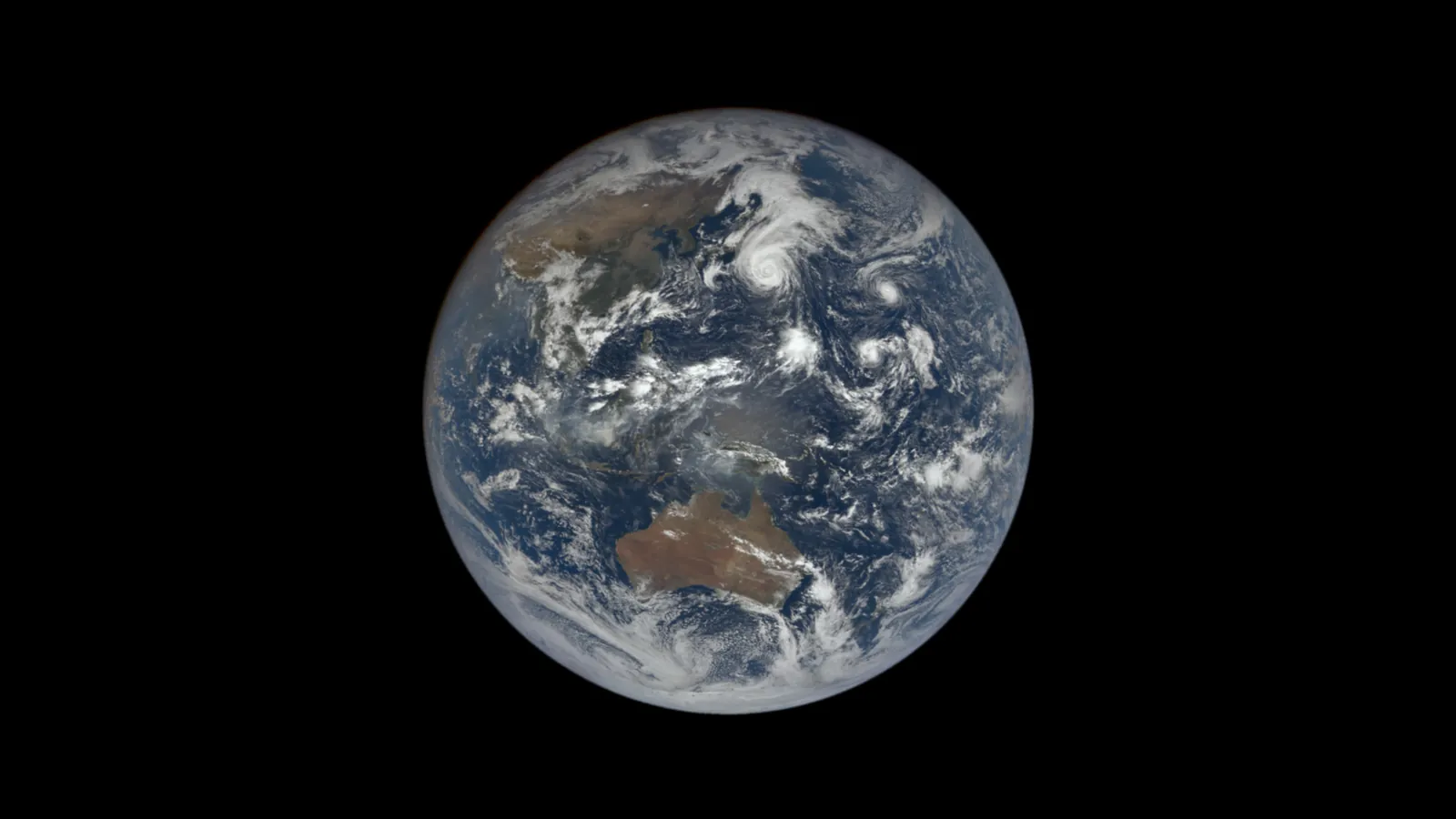
- Oct 6, 2026, 02:24 UTC · NASA/NOAA DSCOVR EPIC · NASA imagery is not copyrighted; free to use with credit (NASA media usage guidelines).
Get the next Sky Briefing
Live NOAA solar storm alerts and the weekly night-sky forecast, free.