Sky Briefing • Wednesday, September 30, 2026
Minor solar flares and elevated electron flux mark the week
Solar activity remained low with only minor flares, while Earth-orbiting satellites faced elevated electron flux and skywatchers can look forward to two October meteor showers.
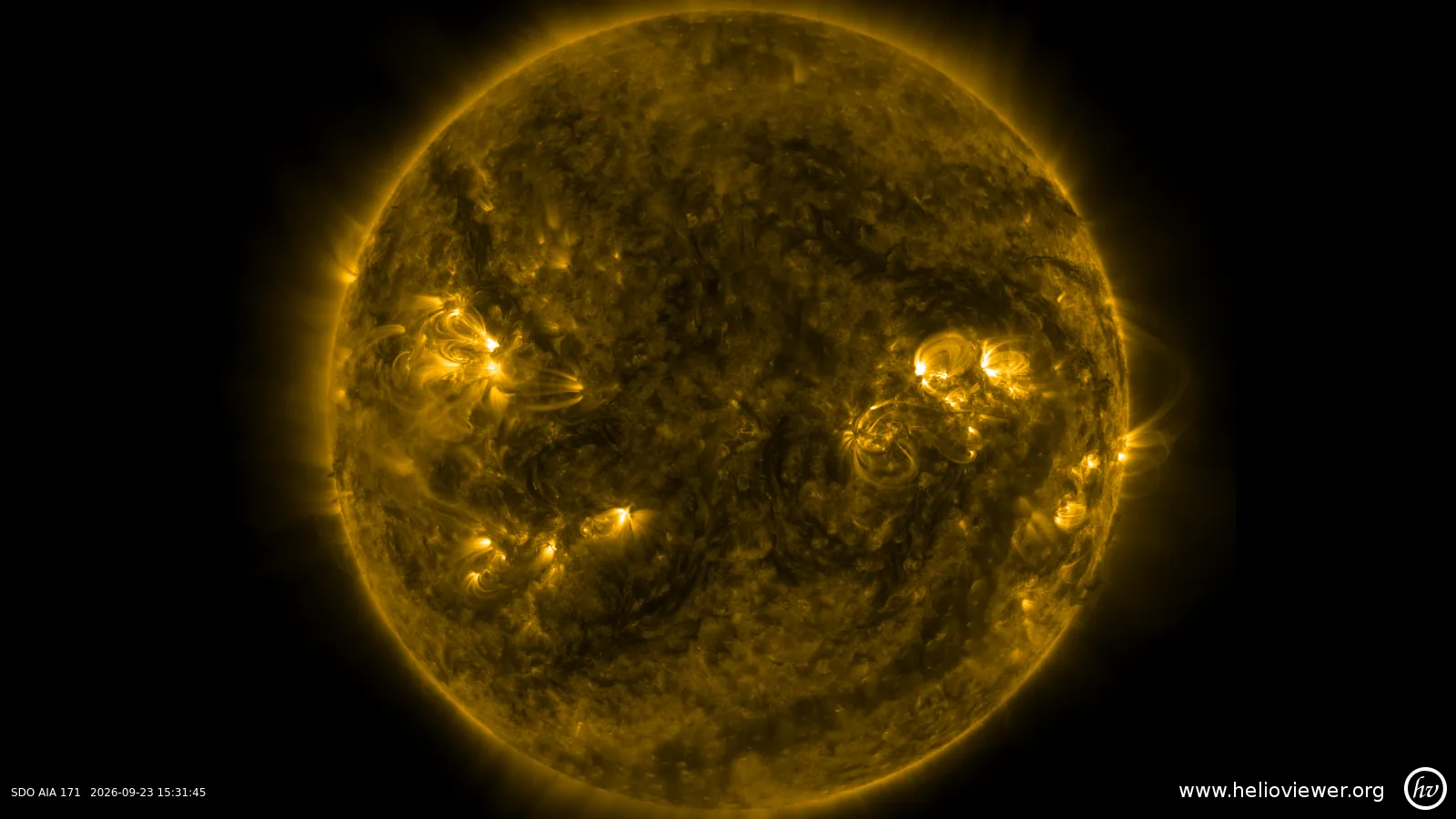
AIA 171 Å (quiet corona and loops), Sep 23, 2026, 15:32 UTC. The Sun at the time of the week's strongest flare (C1.1), a minor event. Credit: NASA/SDO (AIA), rendered by Helioviewer.org. Real observation, not an illustration.
By SpaceWeatherTracker Staff • Data: NOAA SWPC, USGS, NOAA GOES, SpaceWeatherTracker meteor calendar •
2 min read
Peak Kp index
4.3
Below storm threshold (Kp 5)
Strongest flare
C1.1
GOES X-ray class
Largest earthquake
M6.6
USGS
Next up
Orionids
the night of Wednesday, October 21
The sun exhibited low levels of activity over the past seven days, producing a total of 36 flares. Geomagnetic conditions on Earth remained quiet, with activity peaking below storm levels.
However, Earth's magnetosphere experienced two periods of elevated electron flux, posing a potential risk to satellites. Looking ahead, October offers excellent skywatching opportunities with two meteor showers scheduled to peak.
Lead story · The Sun
The Sun
Solar Activity
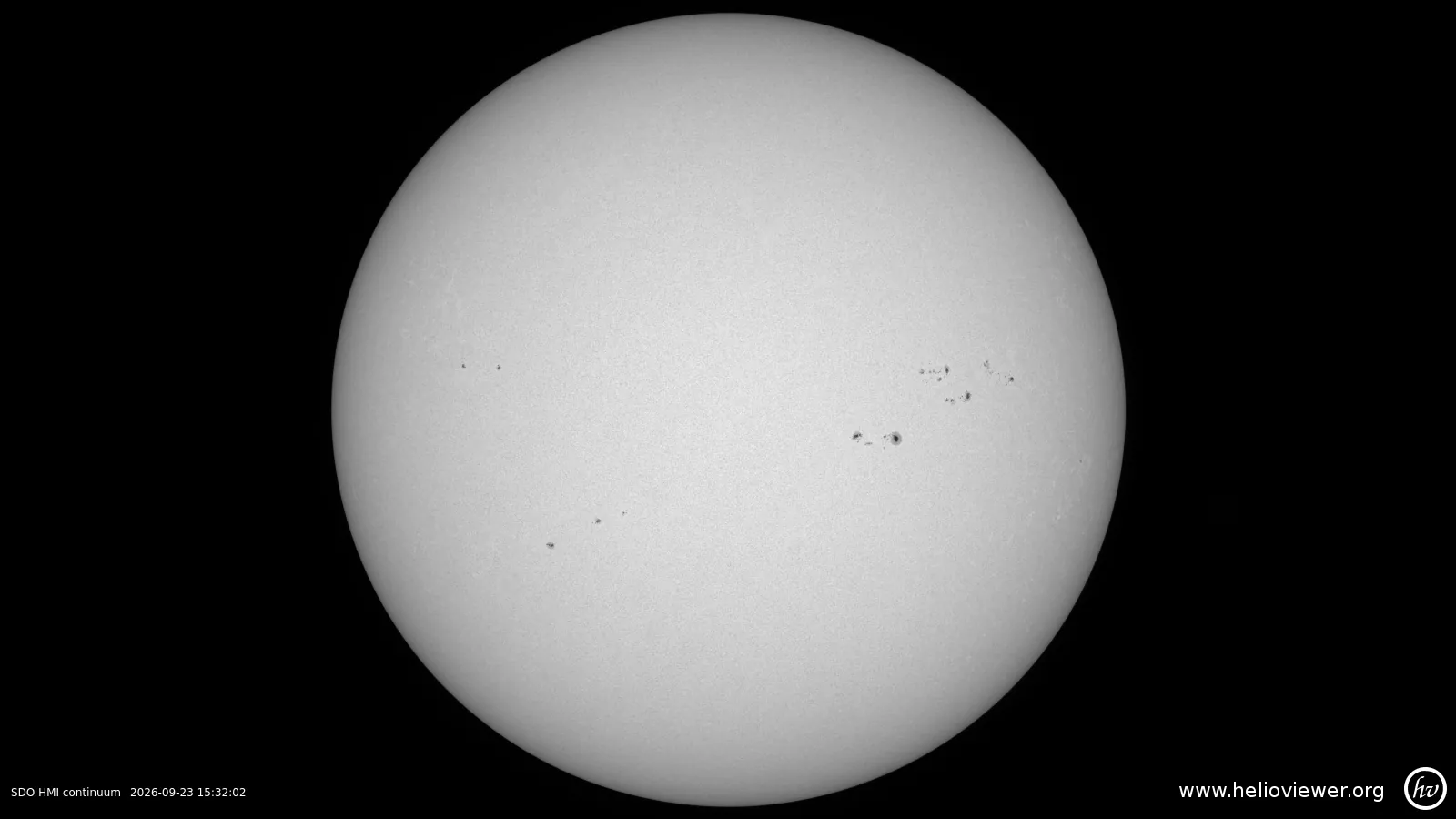
Solar flare activity was minor this week. The strongest event recorded by the GOES satellite was a C1.1 flare on September 23. C-class flares are common and are generally too weak to cause noticeable space weather effects on Earth.
The record
- The strongest flare of the week was C1.1
- 36 flares were recorded by GOES over the past seven days.
- NOAA GOES X-ray fluxSep 23, 2026, 3:32 PM UTC
Space weather
Geomagnetic Conditions
Geomagnetic activity reached a weekly maximum of Kp 4.3 on September 24. This level of activity is below the threshold for a geomagnetic storm, meaning auroral displays were generally confined to high-latitude regions.
NOAA issued alerts on September 26 and September 30 when the integral electron flux at geosynchronous orbit exceeded 1,000 particle flux units. High levels of energetic electrons can cause internal charging in satellite components, potentially disrupting operations. An alert for a Type IV radio emission was also issued on September 30, an event often associated with significant solar eruptions that can interfere with radio communications.
The record
- Geomagnetic activity peaked at Kp 4.3 this week
- That is below storm level, so aurora stayed mainly at high latitudes.
- NOAA SWPCSep 24, 2026, 9:00 AM UTC
- NOAA alert: Electron 2MeV Integral Flux exceeded 1,000pfu
- Threshold Reached: 2026 Sep 30 0945 UTC.
- NOAA SWPC alertsSep 30, 2026, 10:04 AM UTC
- NOAA alert: Type IV Radio Emission
- Begin Time: 2026 Sep 30 0256 UTC.
- NOAA SWPC alertsSep 30, 2026, 3:39 AM UTC
Earth
Seismic Activity
The U.S. Geological Survey reported several notable seismic events around the Pacific. A magnitude 6.6 earthquake occurred on September 25, located 80 km ENE of Tadine, New Caledonia. Other events included a magnitude 5.7 earthquake 180 km NW of Hihifo, Tonga, on September 23, and a magnitude 5.6 quake 74 km S of Yonakuni, Japan, on September 30.
Outlook
The Week Ahead in the Sky
The Draconids meteor shower will peak on the night of Friday, October 9. While a minor shower with up to 10 meteors per hour under ideal conditions, it is unusual in that its best viewing occurs in the early evening, just after nightfall. The meteors will appear to radiate from the constellation Draco.
Later in the month, the Orionids meteor shower is set to peak on the night of Wednesday, October 21. This shower can produce up to 20 meteors per hour radiating from the constellation Orion. For the best views, look for them after midnight until dawn, when Orion is highest in the sky.
The record
- Orionids meteor shower peaks on the night of Wednesday, October 21
- Up to 20 meteors per hour under ideal dark skies, radiating from Orion. Best viewed after midnight until dawn on October 21, when Orion is highest in the sky.
- SpaceWeatherTracker meteor calendarOct 21, 2026, 12:00 PM UTC
- Draconids meteor shower peaks on the night of Friday, October 9
- Up to 10 meteors per hour under ideal dark skies, radiating from Draco. Best viewed right after nightfall on October 9 — unusually, the Draconids are better in the early evening than after midnight, the opposite of most showers.
- SpaceWeatherTracker meteor calendarOct 9, 2026, 12:00 PM UTC
Sources and methodology
This briefing is compiled from official agency data for the seven days ending on the issue date. Figures are reproduced as published; times are UTC. Nothing in this issue is estimated or modelled by us unless stated.
- NOAA SWPC alerts2 records · retrieved Sep 30, 2026, 1:00 PM UTC
- NOAA SWPC1 record · retrieved Sep 30, 2026, 1:00 PM UTC
- USGS1 record · retrieved Sep 30, 2026, 1:00 PM UTC
- USGS1 record · retrieved Sep 30, 2026, 1:00 PM UTC
- USGS1 record · retrieved Sep 30, 2026, 1:00 PM UTC
- NOAA GOES X-ray flux1 record · retrieved Sep 30, 2026, 1:00 PM UTC
- SpaceWeatherTracker meteor calendar1 record · retrieved Sep 30, 2026, 1:00 PM UTC
- SpaceWeatherTracker meteor calendar1 record · retrieved Sep 30, 2026, 1:00 PM UTC
Image credits
Every picture in this issue is a real observation from a NASA, ESA or NOAA mission, taken at the time shown. None is an illustration or AI-generated image.
- Sep 23, 2026, 15:32 UTC · NASA/SDO (AIA), rendered by Helioviewer.org · NASA imagery is not copyrighted; free to use with credit (NASA media usage guidelines).
- Sep 23, 2026, 15:32 UTC · NASA/SDO (HMI), rendered by Helioviewer.org · NASA imagery is not copyrighted; free to use with credit (NASA media usage guidelines).
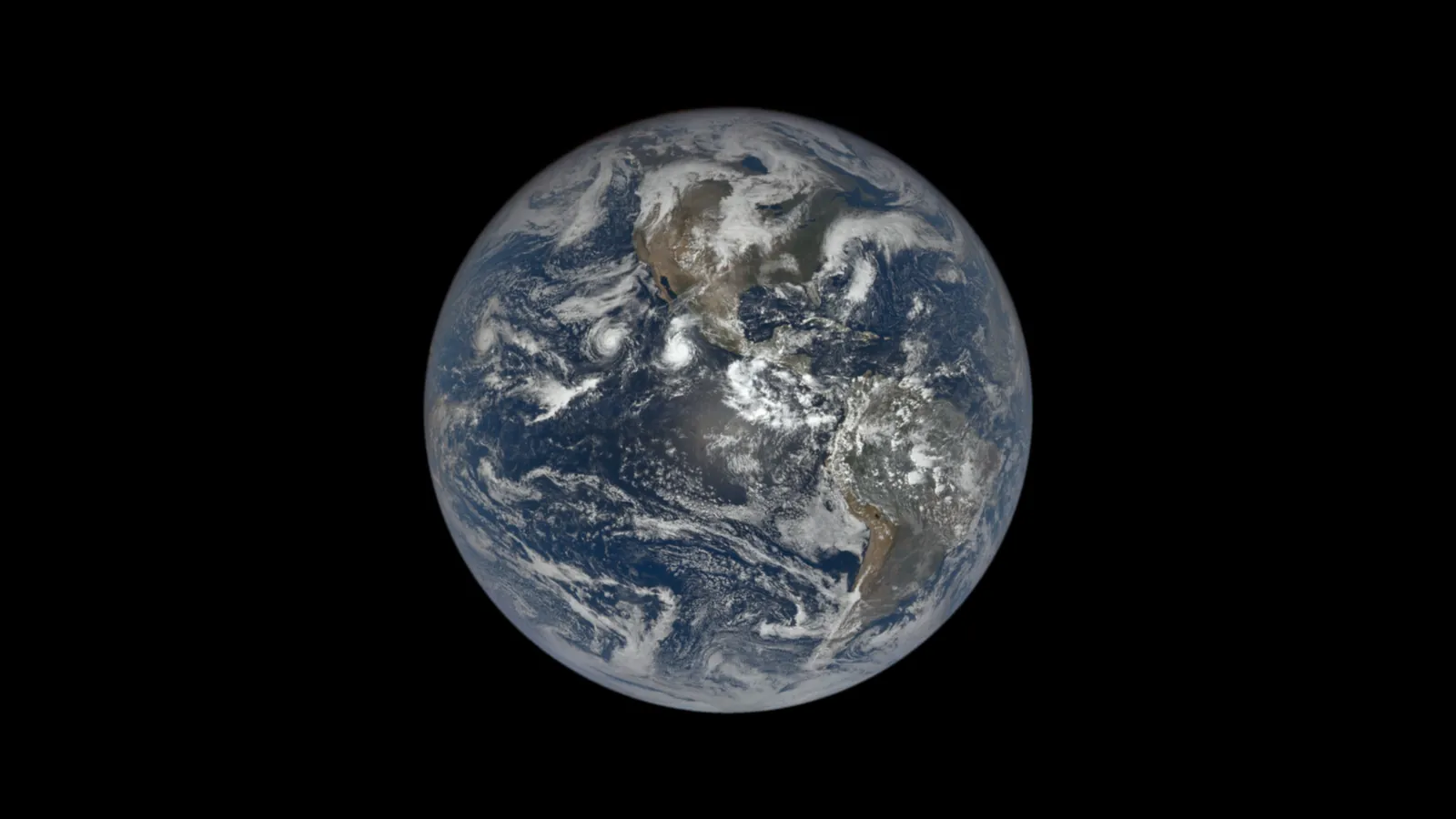
- Sep 25, 2026, 18:27 UTC · NASA/NOAA DSCOVR EPIC · NASA imagery is not copyrighted; free to use with credit (NASA media usage guidelines).
Get the next Sky Briefing
Live NOAA solar storm alerts and the weekly night-sky forecast, free.