Sky Briefing • Wednesday, September 23, 2026
Magnitude 7.0 quake strikes New Caledonia
A magnitude 7.0 earthquake shook New Caledonia, while solar activity remained low and forecasters anticipate a minor geomagnetic storm.
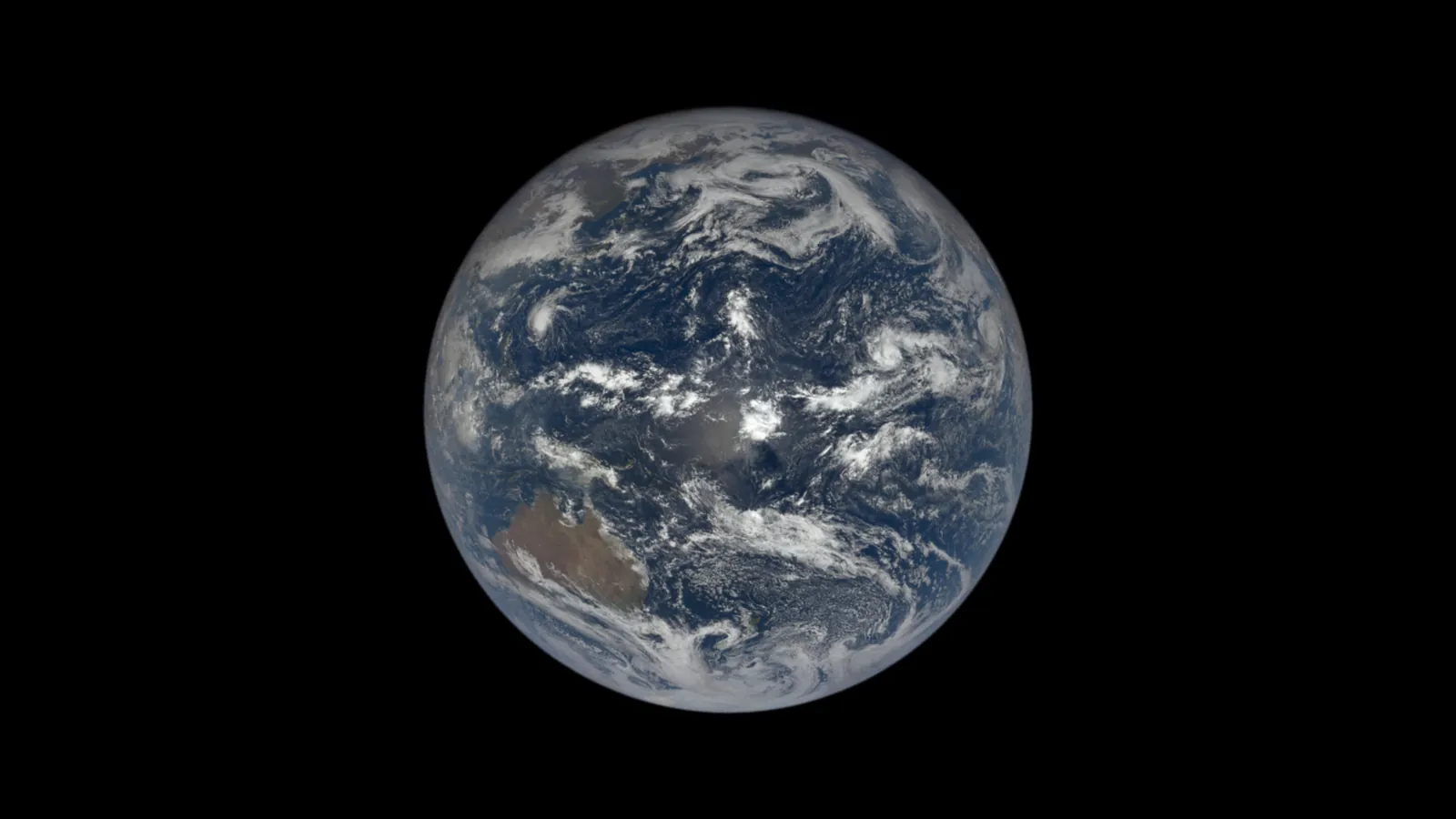
Earth from one million miles away, Sep 25, 2026, 00:27 UTC. Earth on the day a magnitude 7.0 earthquake struck near New Caledonia. A general view of Earth that day; it is not an image of an earthquake or of its damage. Credit: NASA/NOAA DSCOVR EPIC. Real observation, not an illustration.
By SpaceWeatherTracker Staff • Data: NOAA SWPC, USGS, NOAA GOES, NASA DONKI, SpaceWeatherTracker meteor calendar •
2 min read
Peak Kp index
4.3
Below storm threshold (Kp 5)
Strongest flare
C3.3
GOES X-ray class
CMEs catalogued
16
None Earth-directed
Largest earthquake
M7.0
USGS
The Earth's crust was active this week, with a significant magnitude 7.0 earthquake striking near New Caledonia on September 25. Other notable seismic events included a magnitude 6.4 quake in Papua New Guinea and a magnitude 5.7 near Tonga.
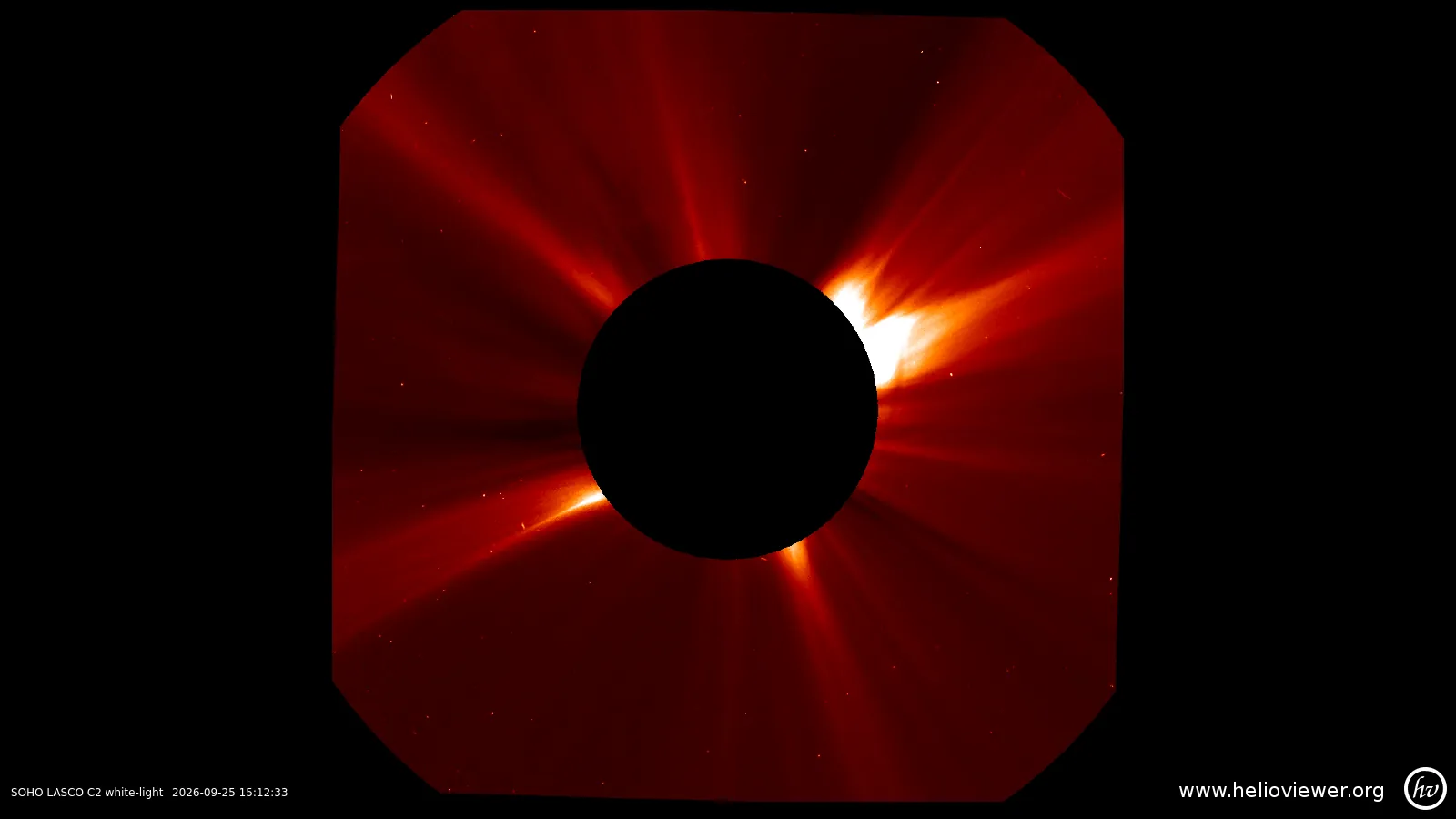
Activity from the Sun was subdued, producing only minor solar flares and no Earth-directed coronal mass ejections. This resulted in relatively quiet geomagnetic conditions, though a minor disturbance is forecast.
Earth
Seismic Activity
A powerful magnitude 7.0 earthquake occurred on September 25, with an epicenter 68 km ENE of Tadine, New Caledonia. Earlier in the week, a magnitude 6.4 earthquake was recorded on September 20, located 49 km NNE of Kainantu, Papua New Guinea. A magnitude 5.7 event also occurred on September 23, approximately 180 km NW of Hihifo, Tonga.
Space weather
Geomagnetic Conditions
Geomagnetic activity remained below storm levels for much of the week, peaking at a Kp-index of 4.3 on September 24. Alerts for a Kp-index of 4 were also issued on September 24 and 25. These levels of disturbance generally confine auroral displays to high-latitude regions.
NOAA forecasters have issued a warning for a potential G1 (Minor) geomagnetic storm, with the K-index expected to reach 5 on September 25. Such events can expand the aurora to lower latitudes and may cause weak power grid fluctuations or minor impacts on satellite operations.
The record
- Geomagnetic activity peaked at Kp 4.3 this week
- That is below storm level, so aurora stayed mainly at high latitudes.
- NOAA SWPCSep 24, 2026, 9:00 AM UTC
- NOAA warning: Geomagnetic K-index of 5 expected
- NOAA scale: G1 - Minor. Valid From: 2026 Sep 25 0835 UTC.
- NOAA SWPC alertsSep 25, 2026, 8:35 AM UTC
- NOAA alert: Geomagnetic K-index of 4
- Threshold Reached: 2026 Sep 25 0257 UTC.
- NOAA SWPC alertsSep 25, 2026, 3:00 AM UTC
The Sun
Solar Activity
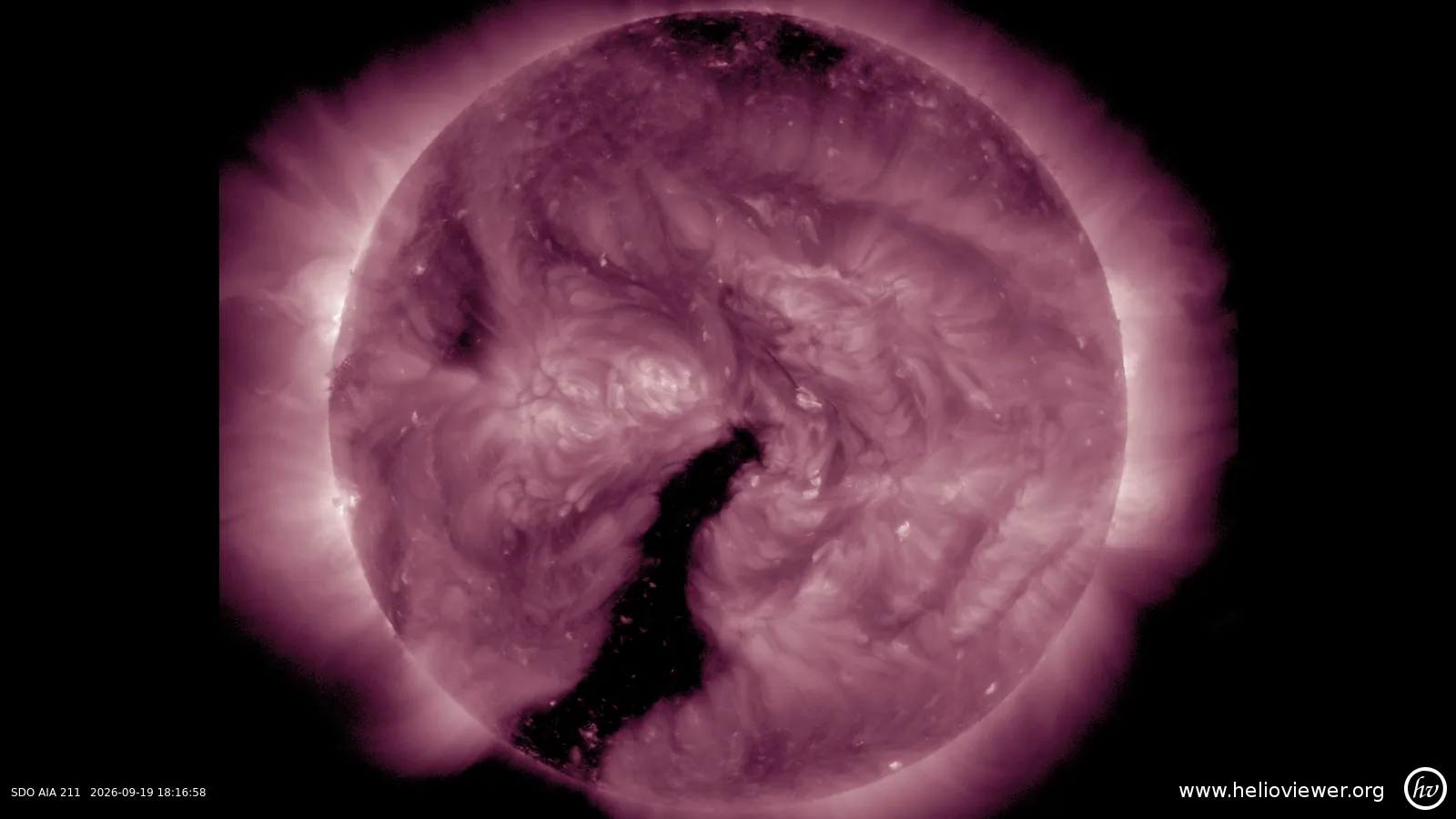
Solar flare activity was low over the past seven days, with GOES satellites recording 39 events. The strongest was a C3.3 flare on September 19. Flares in this class are common and are not powerful enough to cause significant radio blackouts or other effects on Earth.
Sixteen coronal mass ejections were catalogued, with the fastest measured moving near 805 km/s. However, none of these plasma clouds were directed toward our planet, precluding any associated geomagnetic storms.
The record
- The strongest flare of the week was C3.3
- 39 flares were recorded by GOES over the past seven days.
- NOAA GOES X-ray fluxSep 19, 2026, 6:17 PM UTC
- 16 coronal mass ejections were catalogued this week, none Earth-directed
- The fastest was measured near 805 km/s.
- NASA DONKISep 25, 2026, 3:12 PM UTC
Outlook
The Week Ahead in the Sky
Skywatchers can look forward to the Draconids meteor shower, which peaks on the night of Friday, October 9. Under ideal dark-sky conditions, observers may see up to 10 meteors per hour radiating from the constellation Draco.
Unusually for a meteor shower, the Draconids are best viewed in the early evening, just after nightfall, rather than in the hours before dawn. This provides a convenient viewing opportunity for observers in the Northern Hemisphere.
The record
- Draconids meteor shower peaks on the night of Friday, October 9
- Up to 10 meteors per hour under ideal dark skies, radiating from Draco. Best viewed right after nightfall on October 9 — unusually, the Draconids are better in the early evening than after midnight, the opposite of most showers.
- SpaceWeatherTracker meteor calendarOct 9, 2026, 12:00 PM UTC
Sources and methodology
This briefing is compiled from official agency data for the seven days ending on the issue date. Figures are reproduced as published; times are UTC. Nothing in this issue is estimated or modelled by us unless stated.
- NOAA SWPC alerts2 records · retrieved Sep 25, 2026, 9:39 PM UTC
- USGS1 record · retrieved Sep 25, 2026, 9:39 PM UTC
- NOAA SWPC1 record · retrieved Sep 25, 2026, 9:39 PM UTC
- USGS1 record · retrieved Sep 25, 2026, 9:39 PM UTC
- USGS1 record · retrieved Sep 25, 2026, 9:39 PM UTC
- NOAA GOES X-ray flux1 record · retrieved Sep 25, 2026, 9:39 PM UTC
- NASA DONKI1 record · retrieved Sep 25, 2026, 9:39 PM UTC
- SpaceWeatherTracker meteor calendar1 record · retrieved Sep 25, 2026, 9:39 PM UTC
Image credits
Every picture in this issue is a real observation from a NASA, ESA or NOAA mission, taken at the time shown. None is an illustration or AI-generated image.
- Sep 25, 2026, 00:27 UTC · NASA/NOAA DSCOVR EPIC · NASA imagery is not copyrighted; free to use with credit (NASA media usage guidelines).
- Sep 25, 2026, 15:12 UTC · ESA & NASA/SOHO (LASCO), rendered by Helioviewer.org · SOHO is a project of international cooperation between ESA and NASA; images are free to use with credit.
- Sep 19, 2026, 18:17 UTC · NASA/SDO (AIA), rendered by Helioviewer.org · NASA imagery is not copyrighted; free to use with credit (NASA media usage guidelines).
Get the next Sky Briefing
Live NOAA solar storm alerts and the weekly night-sky forecast, free.